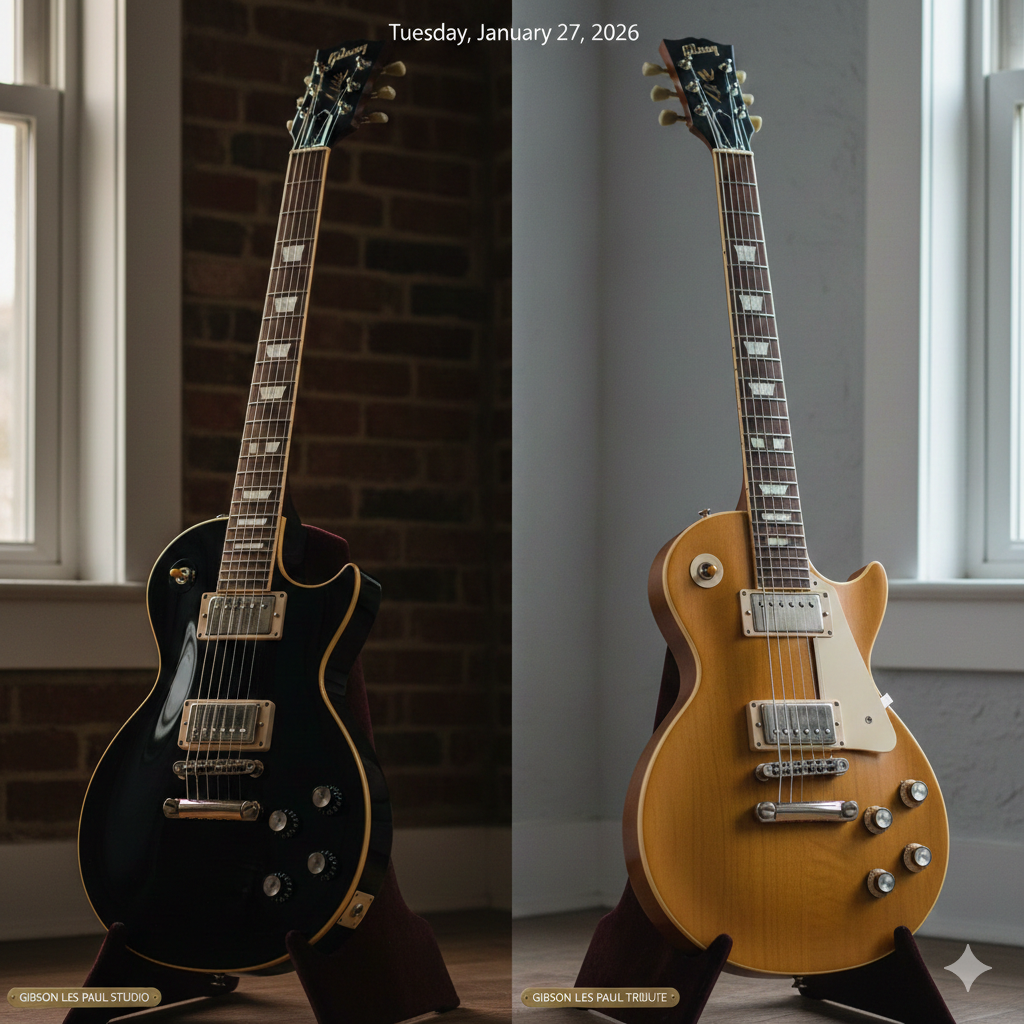
If you’re shopping for an affordable American-made Gibson Les Paul on the used market, you’re going to encounter these two models constantly. Both represent Gibson’s answer to the question: “How do we give players the Les Paul experience without the Standard price tag?”
But they answer that question differently. Understanding those differences is crucial to making the right choice for your playing style and budget.
Two paths to the same destination—but with different scenic routes along the way.
The Philosophy Behind Each Guitar
The Les Paul Studio: Introduced in 1983, the Studio’s premise is simple: give players a real Les Paul, cut the cosmetic features (no binding, no fancy tops), and lower the price. It’s the “no-frills” workhorse.
The Les Paul Tribute: This is an homage to the “Golden Era.” It features traditional appointments and a satin finish that evokes guitars that have been played hard for decades. It feels “vintage” right out of the box.
🎸 Specs That Actually Change the Feel
While they look similar, two key differences will dictate how these guitars feel in your hands.
1. The Neck Debate: Mahogany vs. Maple
The Studio uses a Mahogany neck with a Slim Taper profile. This is fast, modern, and feels like the more expensive Gibson models.
The Tribute uses a Maple neck with a Rounded profile. This is a departure from Gibson tradition. Maple is slightly brighter/snappier, and the profile is chunkier. If you like a “handful of neck,” the Tribute is for you.
2. The Finish: Gloss vs. Satin
The Studio has a Gloss Nitro finish. It looks premium and protects the wood, but the neck can get “sticky” if you sweat.
The Tribute has a Satin Nitro finish. It looks worn-in and vintage. The major win? The neck feels incredibly smooth and fast, even during a long, sweaty set.
⚡ Pickup Power and Versatility
The Studio is built for the modern multi-genre player, while the Tribute stays in the classic rock lane.
The Studio (498T Bridge): High-output, Alnico V magnets. It’s hot, aggressive, and cuts through a rock or metal mix. Plus, it has Coil-Tapping (push-pull knobs) for single-coil sounds.
The Tribute (490T Bridge): Lower-output, Alnico II magnets. It’s sweeter and more vintage-voiced. Think classic blues and 70s rock. No coil-tapping here.
📊 Comparison at a Glance
Feature
Les Paul Studio
Les Paul Tribute
Used Price
$900 – $1,200
$700 – $950
Neck Wood
Mahogany
Maple
Neck Profile
Slim Taper (Thin)
Rounded (Thick)
Bridge Pickup
498T (Hot/Modern)
490T (Vintage/Smooth)
Coil-Tap?
Yes
No
Finish
Gloss
Satin
🚩 Red Flags for Used Buyers
For Studios: Check the coil-tap pots. Push-pull knobs are more prone to failing or becoming “scratchy” over time.
For Tributes: Inspect the fret ends. Some early Tribute runs had less-than-perfect fret finishing (fret sprout) compared to the more expensive Studios.
Common Gibson Check: Always look at the headstock-to-neck transition for any signs of cracks or “invisible” repairs—this is the most common Gibson break point.
Final Verdict
Buy a used Les Paul Studio if: You need one guitar that can cover everything from jazz to metal. You prefer a thin neck and want that high-gloss “expensive guitar” look.
Buy a used Les Paul Tribute if: You want a vintage-feeling “player’s guitar” that stays smooth when you sweat. You’re on a tighter budget but still want that authentic Gibson growl.