
Here’s a question I get asked constantly at guitar shows and in my inbox: “Should I buy a brand new guitar, or is a used one actually better?” It’s not a simple yes or no answer, but after two decades of buying, selling, and playing hundreds of guitars, I can tell you this—when it comes to neck stability specifically, a well-chosen used guitar often has a genuine advantage over something fresh off the factory floor.
Let me explain why, and more importantly, how to tell the difference between a used guitar that’s “proven itself” and one that’s just old.
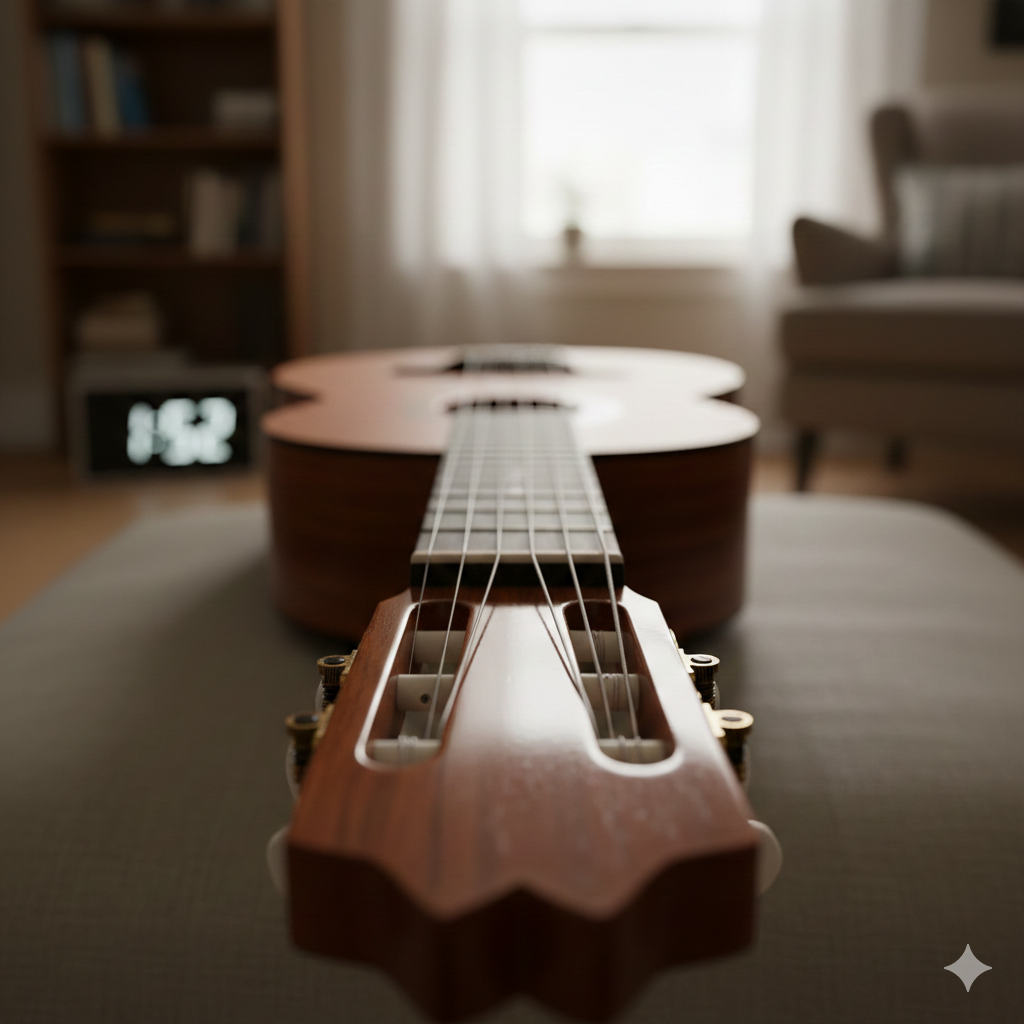
Sighting down a guitar neck is the first step in evaluating neck stability on any used instrument.
The Science Behind “Seasoned” Wood
Wood is a living material—even after it’s been cut, dried, and shaped into a guitar neck. It contains internal tensions from how the tree grew, how the lumber was cut, and how it was dried. When a guitar is brand new, those internal stresses haven’t fully resolved themselves yet.
Here’s what happens over time: the wood fibers settle, moisture content stabilizes, and internal tensions release. This process is called seasoning, and it can take years—sometimes decades—to fully complete. A guitar that’s been through multiple seasonal cycles of humidity changes has essentially been “tested” by nature. If it was going to warp, twist, or develop a ski jump at the upper frets, it would have already done so.
This is the core argument for buying used: a 10-year-old guitar with a straight neck has proven it can stay straight. A brand new guitar, no matter how well-made, is still an unknown quantity.
What “Neck Stability” Actually Means
Before we go further, let’s define what we’re evaluating. A stable guitar neck should:
Stay straight (or maintain proper relief) across seasons. Some necks need constant truss rod adjustments every time the humidity changes. Others barely move at all year-round. The latter is what we’re after.
Resist twisting. A twisted neck—where one side of the fretboard is higher than the other—is often unfixable without major surgery or replacement. This happens when wood was improperly dried, cut from a stressed part of the tree, or simply unlucky in the grain department.
Maintain consistent action. If you set up your guitar perfectly in January and it’s unplayable by July, that’s a stability problem.
Hold tuning reliably. While tuning stability involves multiple factors (nut, tuners, bridge), a neck that’s constantly moving contributes to tuning headaches.
The Advantage of Buying “Proven” Used Guitars
When you buy a used guitar that’s 5, 10, or 20 years old and the neck is still straight, you’re not gambling anymore. That instrument has already survived:
Multiple seasonal humidity cycles (the biggest stress test for any guitar neck), years of string tension pulling on the headstock, temperature fluctuations from storage, transport, and gigging, and whatever care (or neglect) the previous owner provided.
If the neck came through all of that without warping or twisting, there’s an excellent chance it will continue to be stable for decades more. The wood has settled into its final form.
Compare this to a brand new guitar: even with excellent quality control, you simply can’t know how that particular piece of wood will behave over time. I’ve seen expensive custom shop guitars develop twisted necks within two years, while bargain-bin imports from the 1990s play perfectly to this day. Wood is unpredictable—but time reveals which pieces are winners.
The Real-World Test: I live in a climate with brutal seasonal swings—dry, heated air in winter and humid summers. The guitars in my collection that need the fewest truss rod adjustments are almost exclusively my older instruments. They’ve stabilized. My newer guitars, even high-end ones, often need tweaking when the seasons change.
The Flip Side: When “Used” Means “Damaged”
Now, here’s where the nuance comes in. Not every used guitar is a winner. Some develop problems because of age, neglect, or poor storage. A used guitar with a problematic neck isn’t “seasoned”—it’s just broken.
This is why inspection is absolutely critical when buying used. You’re not looking for any old guitar; you’re looking for one that has proven its stability over time and been reasonably cared for.
Red flags that indicate neck problems on a used guitar include:
Visible twist when sighting down the neck. Hold the guitar at eye level and look down the fretboard from the headstock toward the body. Both edges of the fretboard should appear parallel. If one side dips or rises compared to the other, walk away.
Excessive bow that won’t adjust out. Some forward relief is normal and adjustable via the truss rod. But if the neck looks like a ski slope even with the truss rod maxed, the neck has failed.
A “ski jump” or hump where the neck meets the body. This is common on acoustic guitars and indicates the neck block area has risen. It’s expensive to fix (neck reset territory) and a sign the guitar was stored improperly.
Fret ends poking out from the fretboard edges. This means the neck has shrunk significantly—usually from very dry conditions. While the frets can be dressed, it’s a warning sign about the wood’s stability.
Cracks at the headstock or heel. These are structural failures, often from drops or impacts. Even well-repaired headstock breaks reduce a guitar’s value and long-term reliability.
What About Roasted/Torrefied Maple?
You might be wondering: “Don’t modern roasted maple necks solve the stability problem for new guitars?”
Roasted (or torrefied) maple has been heat-treated in an oxygen-free environment to drive out moisture and essentially simulate decades of natural aging. The result is wood that’s significantly more resistant to humidity changes right out of the gate.
I own several guitars with roasted maple necks, and they do require fewer seasonal adjustments than traditional maple. However, roasted maple comes with trade-offs: it’s more brittle than traditional maple, we don’t yet have decades of real-world data on how these necks age, the process and quality control vary between manufacturers, and it’s typically found only on higher-end (more expensive) guitars.
If you’re buying new and neck stability is your priority, roasted maple is worth considering. But it doesn’t eliminate the fundamental advantage of a proven used instrument—it just narrows the gap.
Pros and Cons: Used vs. New for Neck Stability
| Factor | Used Guitar (5+ years old, good condition) | New Guitar |
|---|---|---|
| Neck stability proven | Yes—has survived seasonal cycles | Unknown—still settling |
| Wood fully seasoned | Likely yes, especially 10+ years | No—may take years |
| Risk of hidden defects developing | Low if currently straight | Higher—wood still has internal tensions |
| Truss rod adjustment frequency | Often less frequent | Often needs more seasonal tweaking |
| Warranty coverage | Typically none | Yes—usually 1-5 years |
| Price | Generally 30-50% less than new | Full retail |
| Cosmetic condition | Shows wear (character or damage depending on perspective) | Pristine |
| Risk of inherited problems | Yes—requires careful inspection | Low if from reputable dealer |
| Resale value trajectory | Relatively stable | Depreciates immediately |
How to Find a “Proven” Used Guitar
If you’re convinced that a stable used guitar is the way to go, here’s how to find one:
Target the sweet spot: 5-15 years old. Guitars in this age range have been through enough seasonal cycles to reveal any instability issues, but aren’t so old that age-related wear becomes a major factor. They’re also recent enough that replacement parts are readily available if needed.
Inspect the neck religiously. Sight down it from both the headstock and bridge ends. Check for twist, excessive bow, and humps. If buying online, request photos or video of the seller sighting down the neck.
Ask about storage history. A guitar that lived in a climate-controlled home is a better bet than one that spent years in an unheated garage or attic.
Play every fret on every string. Listen for buzzing that might indicate high frets, a warped board, or worn frets. Feel for fret ends poking out at the edges.
Check the truss rod. With the seller’s permission, make a small adjustment to verify the truss rod moves freely and isn’t stripped or frozen. A working truss rod is essential.
Buy from reputable sources. Established dealers and shops typically inspect their used inventory. Private sales can offer better prices but require more due diligence on your part.
Quick Neck Inspection Checklist
- ☐ Sight down neck from headstock—no visible twist
- ☐ Sight from bridge end—neck appears straight with slight relief
- ☐ No “ski jump” hump at upper frets where neck meets body
- ☐ Fret ends don’t poke out from fretboard edges
- ☐ No cracks at headstock or neck heel
- ☐ Truss rod adjusts freely (not stripped or frozen)
- ☐ Action is reasonable and adjustable
- ☐ No dead spots or excessive buzzing when playing all frets
- ☐ Neck joint is tight with no movement when wiggled
Final Verdict: Is Used Actually Better?
For neck stability specifically? In most cases, yes—a well-chosen used guitar with a proven track record is a safer bet than rolling the dice on how a new guitar’s wood will behave over time.
But “well-chosen” is the operative phrase. A poorly maintained used guitar can be far worse than any new instrument. The advantage only exists when you take the time to inspect carefully and select an instrument that has genuinely proven itself.
My personal approach: I buy used guitars that are at least 5-10 years old, inspect them thoroughly, and consider myself buying “proven stability” as much as I’m buying tone and playability. The guitars that survive my inspection process almost always turn out to be incredibly reliable players that rarely need adjustment.
New guitars have their place—especially if you want a warranty, specific modern features, or the satisfaction of being the first owner. But if you’re chasing stability and don’t mind a few honest play marks, the used market is full of guitars that have already passed the test of time.
Looking for help evaluating a specific used guitar? Send us the details—we love helping players find instruments that will serve them for decades. “boring progress” of better hardware in 2026.