
Here’s a question that I often see on Reddit: “Should I spend the extra money on a Fender Player Stratocaster, or is the Squier Classic Vibe just as good?” After playing several of both over the years, I can tell you this—the answer isn’t as straightforward as the price difference might suggest.
Both guitars represent excellent value in their respective price brackets, but they’re designed with different players and priorities in mind. Let me break down exactly what you’re getting with each, and more importantly, which one makes sense for different buying situations on the used market.
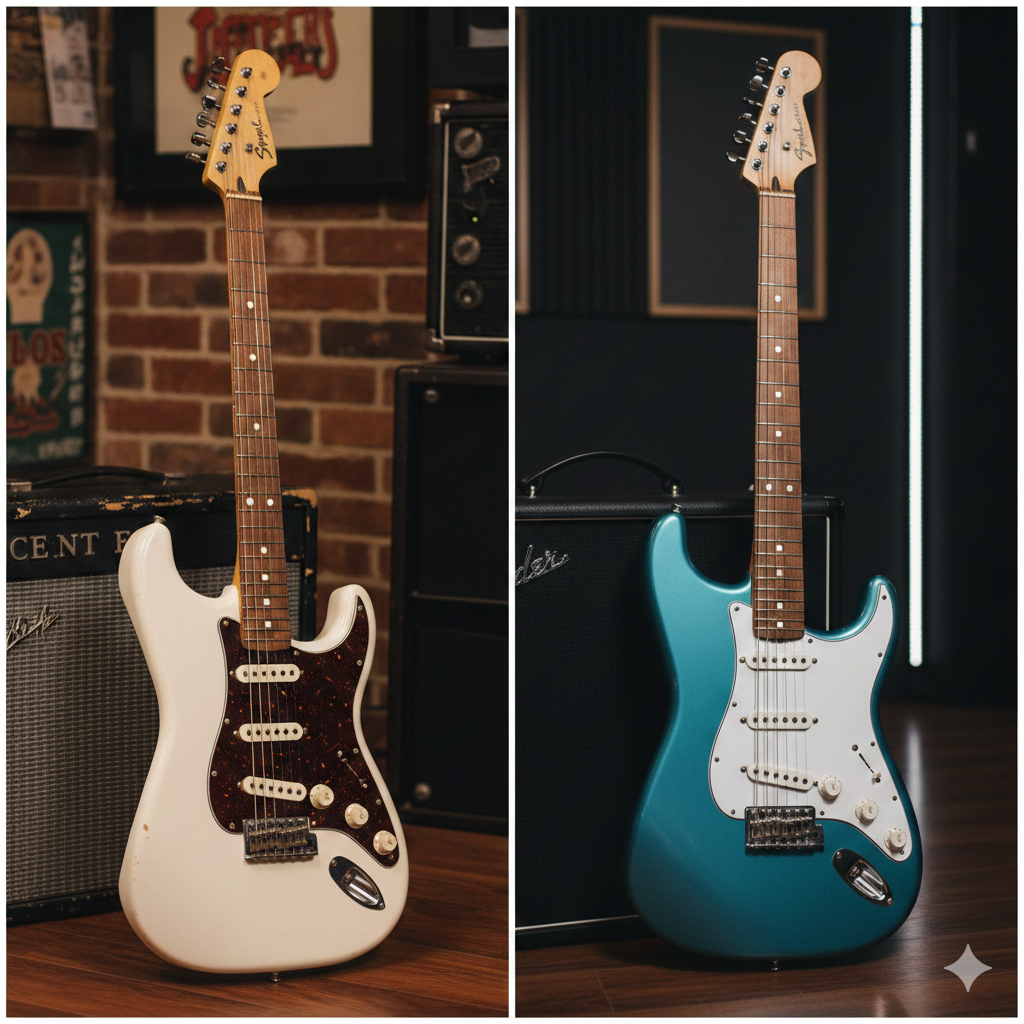
*The family resemblance is clear, but the differences are in the details.*
The Tale of the Tape: Core Specifications
Before we dig into the feel, let’s look at the “bones” of these instruments.
| Feature | Squier Classic Vibe | Fender Player Series |
| Origin | Indonesia (formerly China) | Mexico |
| Body Wood | Nato or Pine | Alder (Traditional) |
| Bridge | 6-point Vintage Tremolo | 2-point Modern Tremolo |
| Nut Material | Genuine Bone | Synthetic Bone |
| Fret Size | 21 Narrow-Tall | 22 Medium-Jumbo |
| Neck Finish | High Gloss | Smooth Satin |
Right away, the aesthetic split is obvious: The Classic Vibe leans vintage, while the Player leans modern.
Build Quality: Consistency vs. Character
I’ve played Classic Vibes that felt every bit as good as the Player Series, and I’ve played Players that felt noticeably more refined.
The Fender Player Advantage
Generally speaking, the Mexican-made Players are more consistent. The neck finish is the big winner here; it features a satin finish on the back that feels smooth and fast, even when your hands get sweaty.
The Squier Classic Vibe “Legend”
The CV line has earned a reputation for “punching above its weight.” While the Indonesian models are solid, the older Chinese-made versions (late 2000s) are bordering on legendary.
- Pro Tip: If you find a CV with a “CGR” or “CGS” serial number prefix, grab it—those are the highly-coveted Chinese models.
Neck and Frets: The “Feel” Factor
This is the biggest physical difference you will notice when you pick them up.
- Classic Vibe (Vintage Spec): Uses 21 narrow-tall frets. They offer great note clarity and string bending, but can feel a bit “speed-bumpy” when sliding up the neck.
- Player Series (Modern Spec): Uses 22 medium-jumbo frets. These are wider and flatter, making it easier to fret notes with less pressure. Plus, you get that 22nd fret for those high-E screams.
Pickups and Tone: Snappy vs. Sweet
Unless you’re recording in a professional studio, both sound like “a Strat.” However, there are subtle flavors:
- Fender Player (Alnico V): Brighter, snappier, and higher output. These cut through a loud band mix effortlessly and handle high-gain pedals better.
- Classic Vibe (Alnico): Voiced traditionally. Think warmer, sweeter, and more “quack.” It’s perfect for blues and classic rock.
The Used Market Math
This is where the Classic Vibe often wins the “Smart Money” award.
- Used Classic Vibe: $250 – $350
- Used Fender Player: $450 – $600
The “Modder’s Strategy”: For the $250 you save by buying the Squier, you could install a set of boutique pickups, locking tuners, and a high-mass tremolo block. You’d end up with a guitar that objectively outperforms the stock Fender for the same total investment.
Who Should Buy What?
✅ Pick the Squier Classic Vibe if:
- You are on a strict budget but want a “forever” guitar.
- You love the vintage aesthetic (tinted necks, gloss finish).
- You enjoy tinkering and plan to upgrade parts over time.
✅ Pick the Fender Player if:
- The Fender logo on the headstock matters to you (better resale value!).
- You prefer a satin neck and modern 2-point tremolo stability.
- You want a “workhorse” that is gig-ready right out of the box.
🚩 Red Flags: What to Watch For Used
- Classic Vibe: Check for “fret sprout” (sharp edges on the side of the neck) and overly sticky gloss finishes that might need a light sanding.
- Fender Player: Check the Pau Ferro fretboards; they can get very dry and brittle if not oiled. Also, check the tremolo arm socket for stripped threads.
Final Verdict
If I were a gigging musician who didn’t want to think about upgrades, I’d grab the Fender Player. But if I were looking for the best “pure value” foundation to build a dream guitar, the Classic Vibe is impossible to beat.
Can’t decide? Play both. The answer usually becomes obvious within about five minutes.